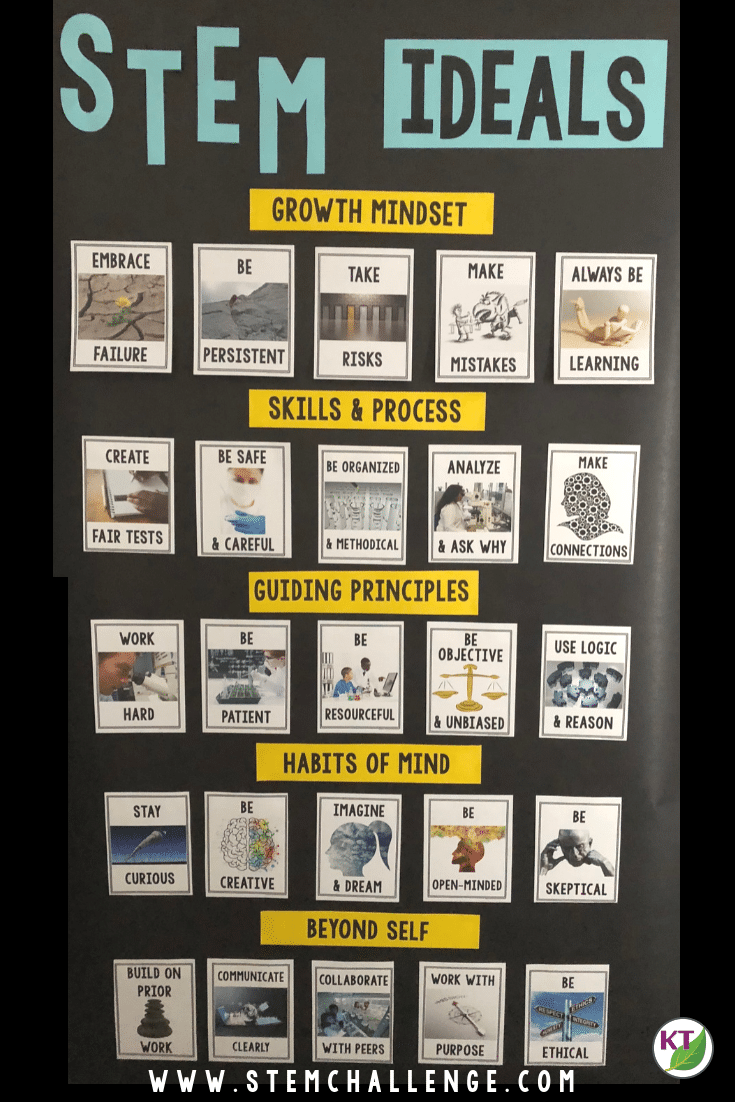
Category: STEM Ideals

  • Character Education in STEM Classes

    Character Education in STEM Classes

    I used to think that spending class time on character education was a luxury. It wasn’t that I didn’t think it was important, but with limited instructional minutes and pressure to perform to benchmark assessments … who had time for character ed.?


    I don’t think I’m alone in making that judgment call, and I think there are a lot of problems caused by our collective lack of attention to character education. It’s really not something we should leave solely up to parents or to chance.


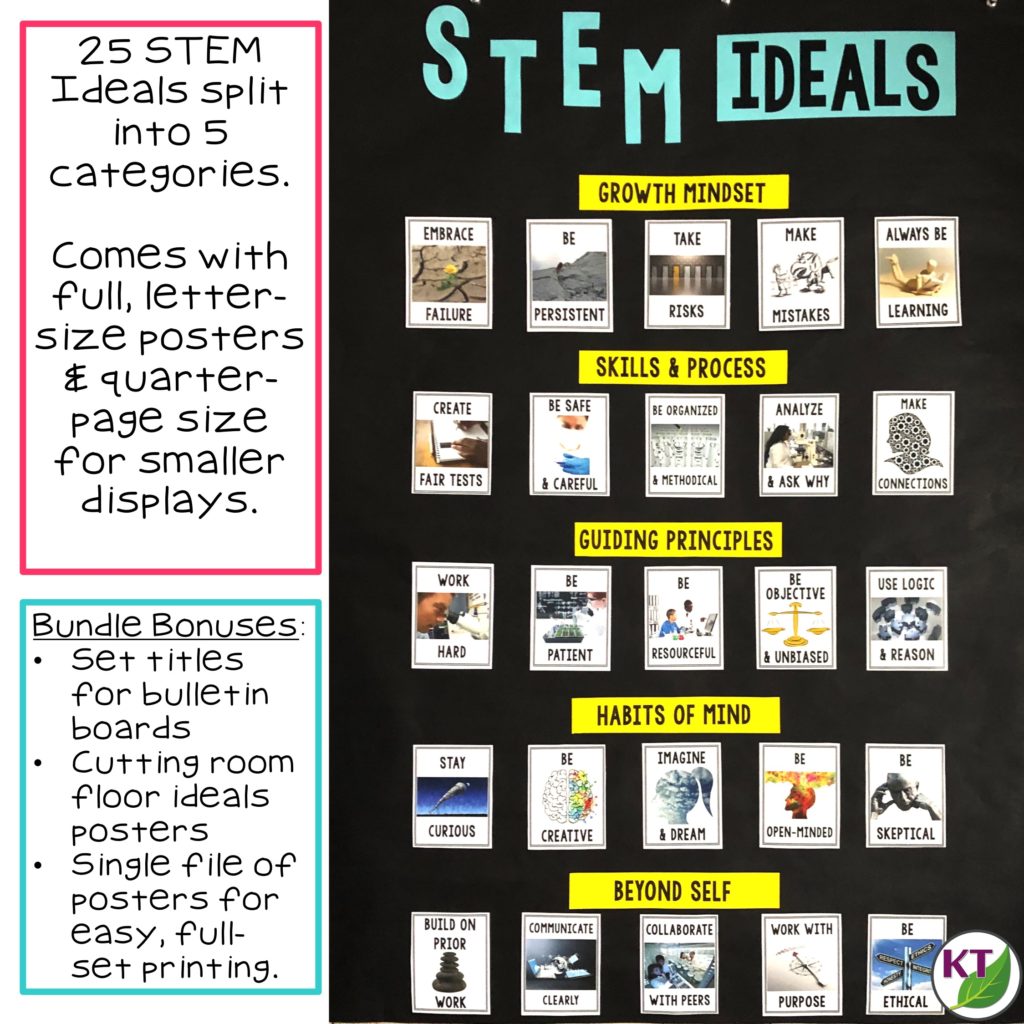
    Since my focus has largely been on STEM Challenges for the last decade, I wanted to hone in on character traits I could explore with students that would help them not only in STEM fields, but in all of life. I call these 25 traits “STEM Ideals“.


    What are STEM Ideals?


    Try STEM Ideals for Free!

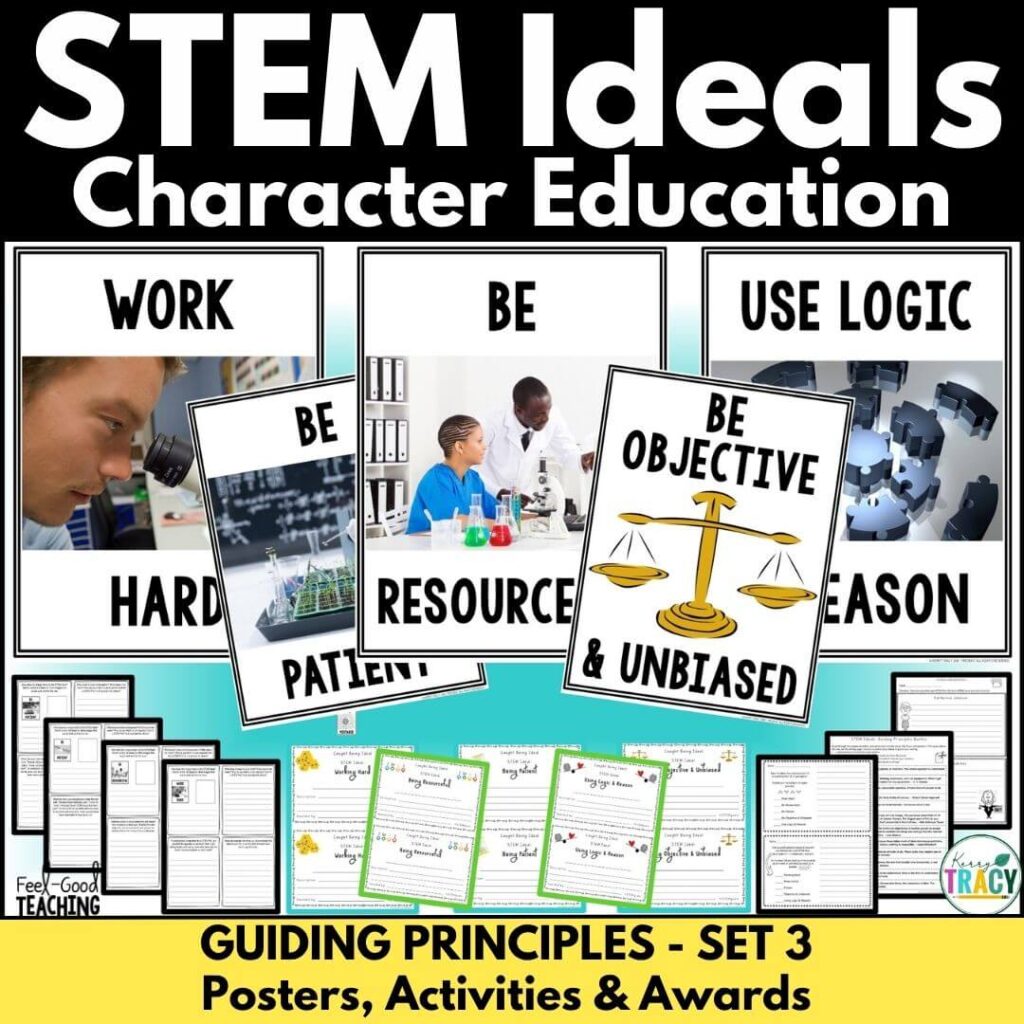
    The best way to get a good sense of the STEM Ideals is to try them out. You can grab the posters and activities for set three (Guiding Principles) for free by filling out the form below the images.


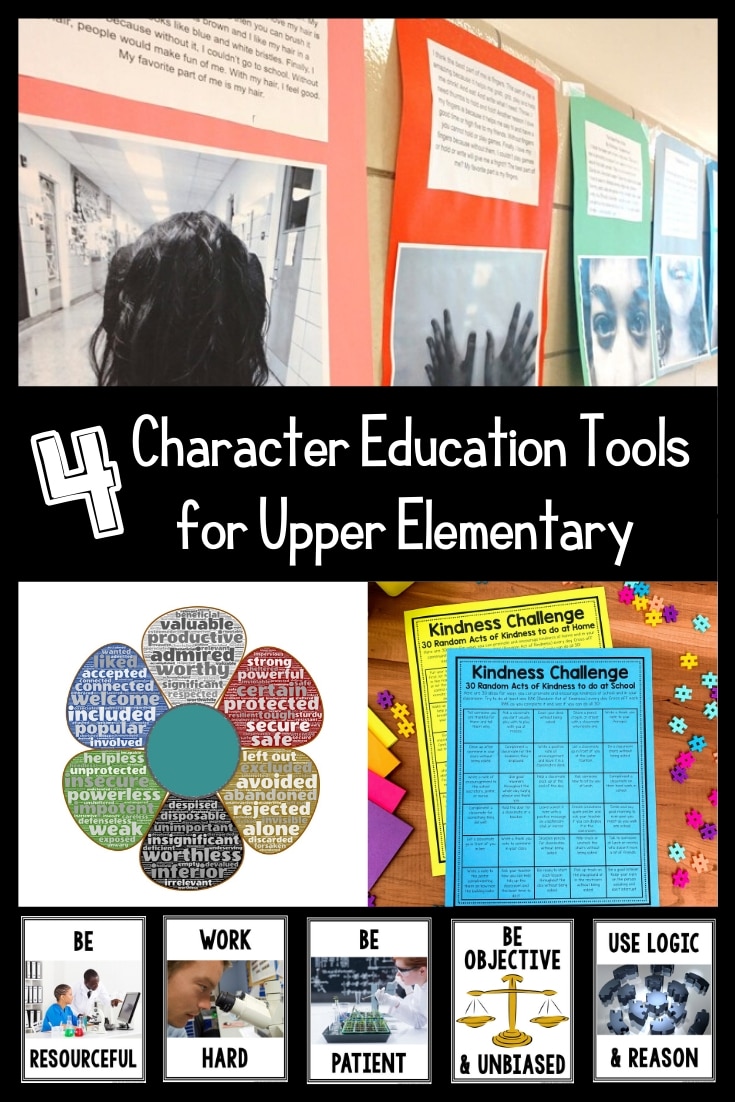
    Character education is more important now than ever! Check out these other free ideas for your upper elementary students and let us do the planning for you! 


    Increasing a Positive Self Image through Writing // Samson’s Shoppe

    The Importance of Character // Tried & True Teaching Tools

    Classroom Kindness Challenge // The Stellar Teacher Company

    Character Education in STEM Classes // Feel-Good Teaching


    Character education is more important now than ever! Check out these other free ideas for your upper elementary students and let us do the planning for you with four easy to implement ideas!

  • Fail Forward

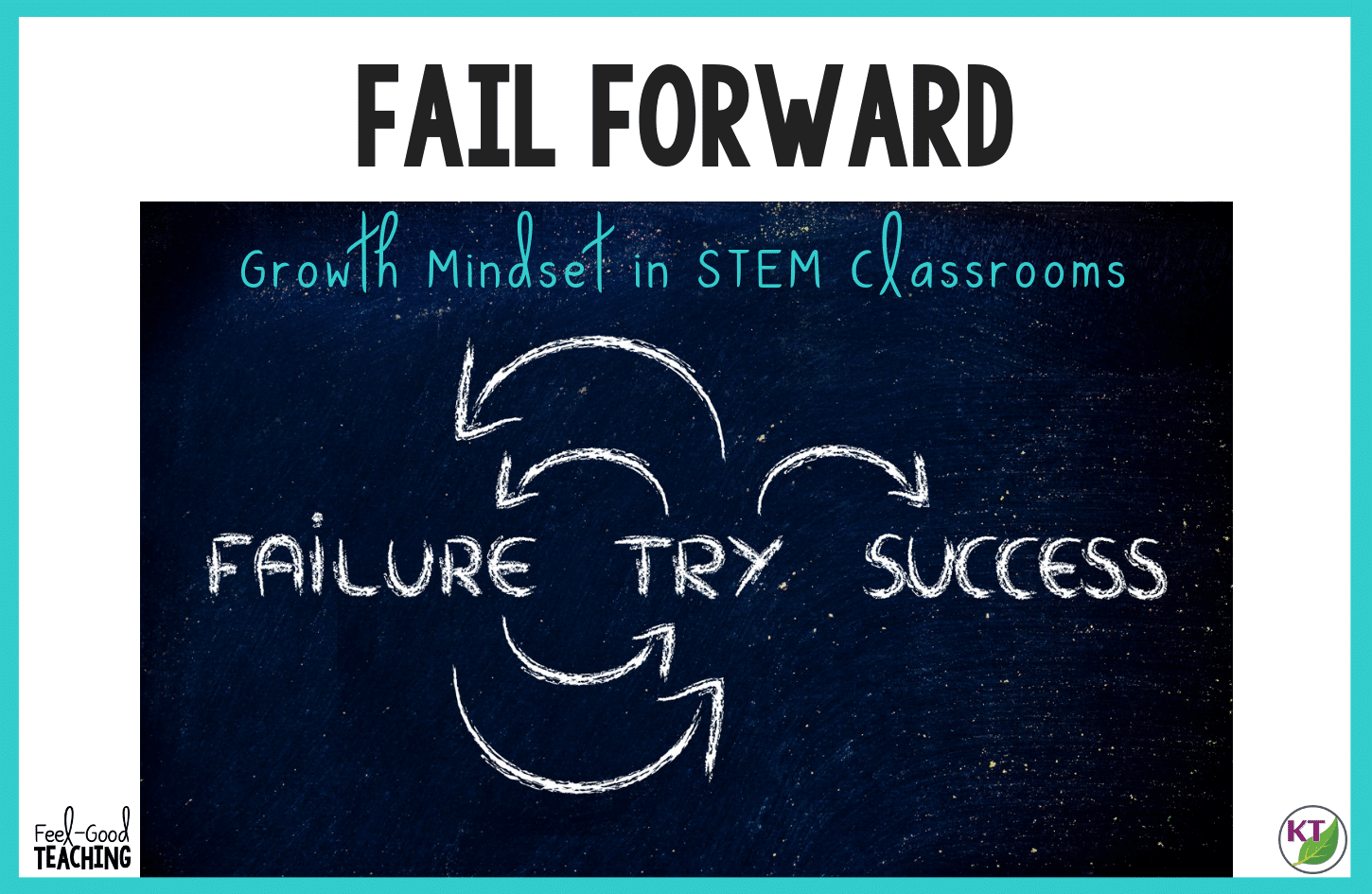
    Fail Forward

    What could be more important than helping students develop healthy relationships with productive failure? I’m hard-pressed to come up with a single thing, honestly. If we help students learn to look failure square in the face with fearlessness and determination, we will have laid the foundation for a successful life.

    This is why in October 2018, we spent the entire month immersed in Failtober.  We built up in baby steps what to do and how to do it, because the how is the tricky part, right? You can find each week summarized in this post.

    Today, I want to leave you with a few additional resources and tips for cultivating a classroom culture that capitalizes on, and celebrates productive failure!


    Keep Your Growth Mindset Fine-Tuned!

    Before you get to worrying about how your students experience failure, you need to take a look inward. I spent a LOT of my years frozen by my fear of failure. I avoided it at most any cost. This is how I know how crucial it is to give students experiences with failure — and of course the bounce-back — early and often. But in order to do a good job of it, I had to be sure my own actions and words didn’t contradict and undermine what I was aiming to help students believe and do.

    So be sure you examine those thoughts and hold them up to the light of day! And where it is necessary, do a little work on your own mind game. I find I need to do regular check-ups. I’m currently reading Uncertainty: Turning Fear and Doubt into Fuel for Brilliance, for example.

    Podcasts can also be a great pick me up on your drive to/from teaching. I LOVE Teach on, Teach Strong for positive teacher topics. These episodes are especially good for this topic:

    Another thing I have found helpful when I’m experiencing my own resistance or fear of failure is to ask myself how I’d want my students to react if the plight was theirs. Then I do my best to act in kind.

    True story — I once signed up for a series of belly-dancing classes thinking it would be fun. I hated it so much. I could feel how clunky my body moved and knew I must look like a total idiot. I was prepared to never return after the first class (a big deal since I couldn’t get refunded for the series). And then the most annoying thing happened. On the drive home, a daydream of a student frustrated with learning operations with fractions popped into my mind. Would I want her to give up because she didn’t get it and felt dumb trying to do it?  Ugh … no, so I kept going to class. It was the last thing I wanted to do, but that’s precisely why I had to do it. I’d love to give you a success story here about how I became a fantastic dancer; I did not. But, I did try and I got an important reminder of what some of our students experience when they struggle and it made it easier for me to talk the talk because I walked the walk — or poorly danced the dance, as the case may be!


    Keep Your Students’ Growth Mindset Fine-Tuned

    Students also need to expose their feelings about failure to the light of day. So much of our beliefs go unexamined, so we never get a chance to see if they really hold up and align with reality!

    As I showed you in Failtober, I like to use a consistent drip of quotes, stories, and real-life practice on these types of growth mindset skills.

    For my STEM classes, I think it is important to define and explore STEM Ideals, those special ways of thinking and interacting with the world that STEM Pros embody. We do this through imagery, STEM Pro quotes, videos, stories, and class discussions. It’s basically a specific form of character education, and I believe it’s crucial in laying the foundation for developing the characteristics we hope to, including embracing productive failure, along with a host of others.

    You might find that you’d like to add to your work on growth mindset. Tarheelstate Teacher is kind of a classroom community guru, in my opinion. So if you want to add even more character ed. in the form of morning meeting and other activities, check out her Growth Mindset resource (it’s free if you choose to sign up for Tarheelstate Teacher’s newsletter).


    Book Recommendations

    In addition to the resources mentioned above, here are a few books to add to your classroom library. Note: the links below are affiliate links. More details are available on the disclosure page, and you’ll find many of these books available at your local library, so check ’em out and save your cash! 🙂

    Mae Among the Stars

    Ada Byron Lovelace & the Thinking Machine

    Grace Hopper: Queen of Computer Code

    Shark Lady: The True Story of How Eugenie Clark Became the Ocean’s Most Fearless Scientist

    Heroes for My Daughter

    Lives of the Scientists: Experiments, Explosions (and What the Neighbors Thought)

    Super Women: Six Scientists Who Changed the World


    And for parents & teachers, I highly recommend:


    Articles

    And here are a few articles to share with your students:

    8 Successful Products That Only Exist Because of Failure

    48 Famous Failures

    Why the Best Success Stories Often Start with Failure


    Practice Fearless Failure

    Now, this is very clearly the most important step. You need to have your students apply what they’ve learned about failure and growth mindset. This means we need to put ALL students in a position where they will struggle. There are some kids that kind of have this whole school thing nailed! They know how to get straight As and it isn’t even hard for them. I was that kid. It shook my foundation when I finally encountered struggle, well into high school.

    I believe STEM Challenges are a valuable tool for this purpose. You can craft the Criteria & Constraints in such as way as to purposely expose students to struggle and potential failure. Sometimes it happens on its own; sometimes you have to mastermind it.

    Only when students are in those moments of frustration and failure can you determine if any of the growth mindset study has become practice. The importance of the way you manage those moments of failure in the classroom cannot be overstated. I went through some tips on that in the Facebook live embedded below.


    Don’t feel like you’re being mean when you create challenges to elicit failure. It’s perhaps one of the kindest things you can do — giving students a safe place to fail and practice recovering. If it helps, change the objective of the lesson in your mind to practice applying growth mindset skills. It’s easy to believe in resilience, persistence, and determination when you’re doing it in theory. Muscles don’t get stronger by thinking about lifting weights; you actually have to get out there and lift! Students need opportunities to practice and test themselves on these ideals under some pressure, early & often. And who better to provide the opportunities than you?


    Check out the rest of Failtober trainings & resources here.


    PIN Me!

    You know growth mindset is key for your students, but how do you actually get them to adopt a growth mindset? How do you get them to be fearless in the face of failure? How do you get students to embrace productive failure and be determined, persistent and resilient? Click through to the blog for some practical ideas!

  • STEM Ideals Series

    STEM Ideals Series

    What if there were no books and no Internet? What if we lost the whole of human scientific knowledge and had to start over again? Are we made of the right stuff to get the job done? Are we really teaching students to think like scientists (and other STEM Pros)? Would they even know what we meant by that?


    These are the questions that keep me up at night and they, along with the quotes you’ll see below, were the driving force behind the STEM Ideals series. Perhaps more than any other content areas, STEM fields are about a special way of thinking.


    STEM Ideals Quote


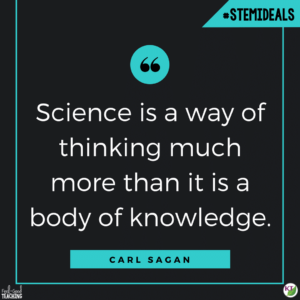
    When I found this quote, I literally got goosebumps. It so perfectly said, in so few words, exactly my lament with the way science is too frequently approached. And if you’re here reading this, I’m pretty confident it resonates with you too. That’s why we love hands-on science! That’s why we love teaching students to think and analyze and be resilient in the face of failure!

    The truth is, I’ve been working on creating resources for several years in that vein, but I’ve always felt something was kind of missing. It just took me a bit to put my finger on it!


    STEM Ideals Quote


    Yes! Yes! A million times, yes! I’ve known that I want my students to approach science in the way STEM Pros do, but I’ve largely asked them to absorb these special traits through osmosis. Shouldn’t there be a more explicit way? A sort of character education specific to STEM?

    Of course! And with that, the STEM Ideals series was born!


    Check Out the STEM Ideals Live Launch


    *Note: This is a replay. The flash freebie has already come & gone. 🙁

    However, I frequently send gifts and freebies to subscribers,
    so make sure you’re subscribed so you don’t miss any future goodness!


    Why are STEM Ideals Important?

    The ideals found throughout the series aim to identify the special way scientists, and really all STEM Pros, think and behave so we may better practice the traits ourselves – in (and hopefully beyond) STEM classes. For this series, I had three major goals:

    1. Explicitly identify common STEM Ideals for students to explore and study.
    2. Provide quotes and examples in a balanced way by gender and ethnicity so all students can see themselves in these professions.
    3. Make it meaningful and practical for teachers to implement in terms of time and planning.


    What are the Ideals & How Were they Chosen?

    I researched and read up on current and legendary STEM professionals (STEM Pros), keeping a running list of traits found in their stories and in their work. Next, I reflected deeply on what I really wanted students to embody in their STEM work. That led to a list of 25 ideals, organized into five categories:

    You can see the mini posters for each set at the bottom of this post. There were some ideals that didn’t quite make the cut or that I weaved into others to keep things tidy. For example, “Ask Questions” was originally its own ideal, but I later determined it fit well within the descriptions for Analyze & Ask Questions, Imagine & Dream, and Think for Yourself/Be Skeptical. I’ve included a few posters that didn’t make the cut as a bonus file in the bundle. Think something is missing? Let me know. I might be able to whip up a quick poster for a future bundle update!


    STEM Ideals Quote


    Why Ideals?

    A lot of thought was given to which term to use for this series: traits, habits, principles, or ideals. While all these terms are used within the resources, “Ideals” received top billing for two main reasons.

    1. An ideal is “a principle to be aimed at.” This “aiming” allows for the humanity and imperfection inherent in STEM (and life). No one can exemplify all of the ideals all of the time, and people will find themselves stronger in some areas than others. In keeping with a growth mindset viewpoint, I wanted students to see ideal behaviors/traits are things one can work on and practice, and that one can never really be done aiming for the ideal! One isn’t simply born creative or not; one can exercise that muscle, so to speak. This is also why all ideals are expressed as phrases rather than nouns, e.g. Be Creative vs. Creativity. (More on that further down.)
    2. I didn’t want to exalt STEM Pros to superhuman exemplars of perfection. When students see STEM Professionals (STEM Pros) can and do fall short on occasion, it feels more natural and less absolute than the other terms would have allowed. I, short, I didn’t want to set students up to assume that all those in STEM professions are paragons of virtue and set them up to be disillusioned when they hear stories of people falling short.


    What’s a STEM Pro?

    The term STEM Professional (Pro) is used throughout this series. A STEM Pro can be someone who earns his/her living in a STEM field, but it doesn’t have to be; a STEM Pro is anyone who embodies the ideals, even — and especially — students!


    Why Verbs Instead of Nouns or Adjectives?

    I’ve opted for phrases like “Be Safe” over “Safety” because the former reminds the reader to take action and strive to live up to the ideal. That said, I know others may prefer the latter, so the posters and student handouts included in the resources are editable within Google Slides.


    What’s Included in the Resources?


    Check out the bundle video preview ?


    • Bulletin Board Headers
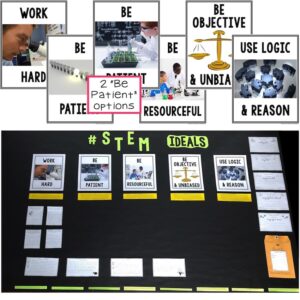
    • 5 Ideals Posters per Set (full letter size & quarter size with editable text; multiple options provided for select ideals)
    • Teacher Pages
      • Background
      • Recommended Lesson Structure
      • Ways to Use this Resource
      • Bonus Options & Resources
      • STEM Ideals Descriptions (editable text)
    • Student Pages (editable text)
      • Mini Reflections (editable text)
      • Quote Analysis (editable text)
        • 60 quotes from current and legendary STEM Professionals (12 per set/category)
      • Video Links & Response Pages based on STEM Pros & Events Related to Ideals
        • Check each set’s preview / table of contents for specifics
      • Ranking Activity
    • Caught Being Ideal Nominations & Awards (editable text)
    • Sample answer keys
    • Access to a website with additional resources (articles, books, videos, and more) that will be updated periodically.


    How Long Will This Take?

    The good news is, adding STEM Ideals to your lessons doesn’t have to take a lot of time. This series was designed to focus on a different ideal each week, for about 5 – 10 minutes a day, making it perfect for bell work, centers, and early finishers. Each day, one or more reflection activities may be assigned. Student options can easily be combined or eliminated to accommodate your schedule.


    Where Can I Find These Sets?

    Each set is linked below.


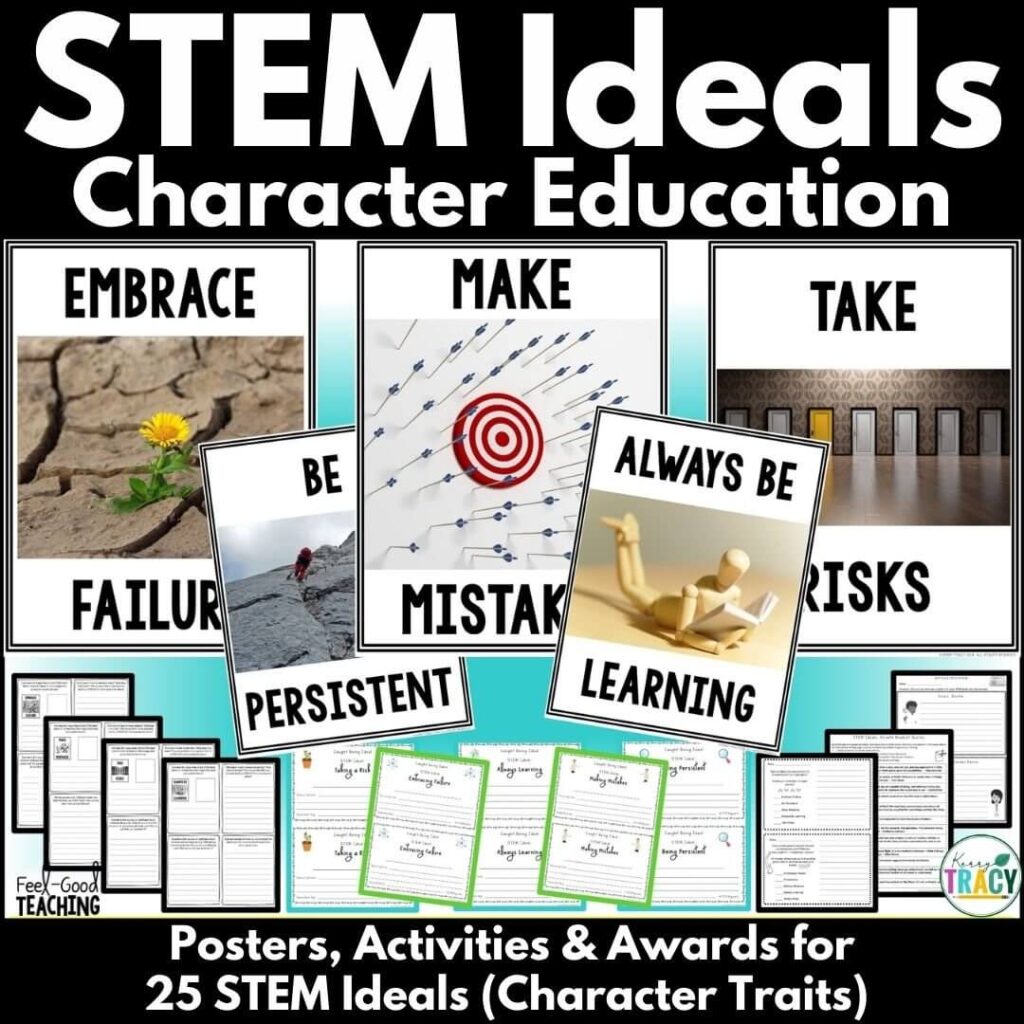
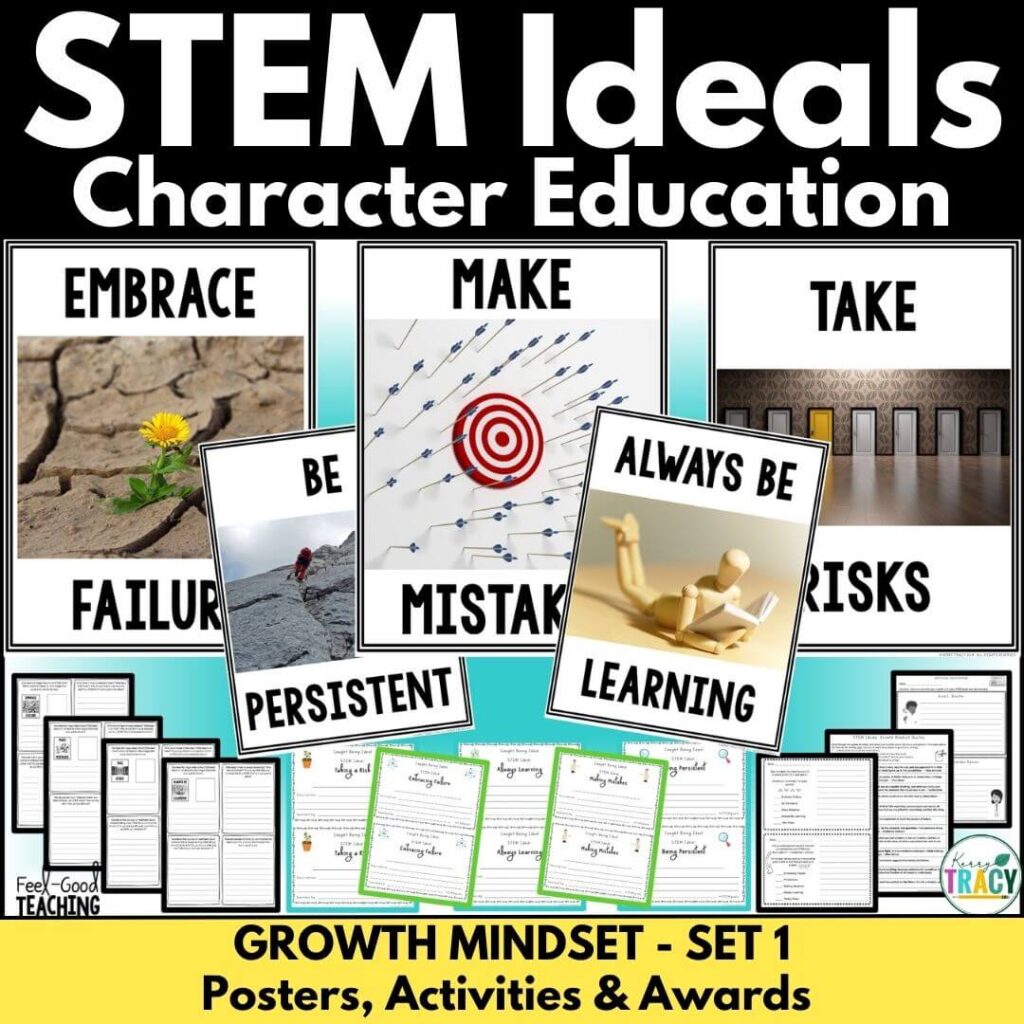
    STEM Posters Character Ed Set 1, Growth Mindset. Posters shown along with student handouts and awards.


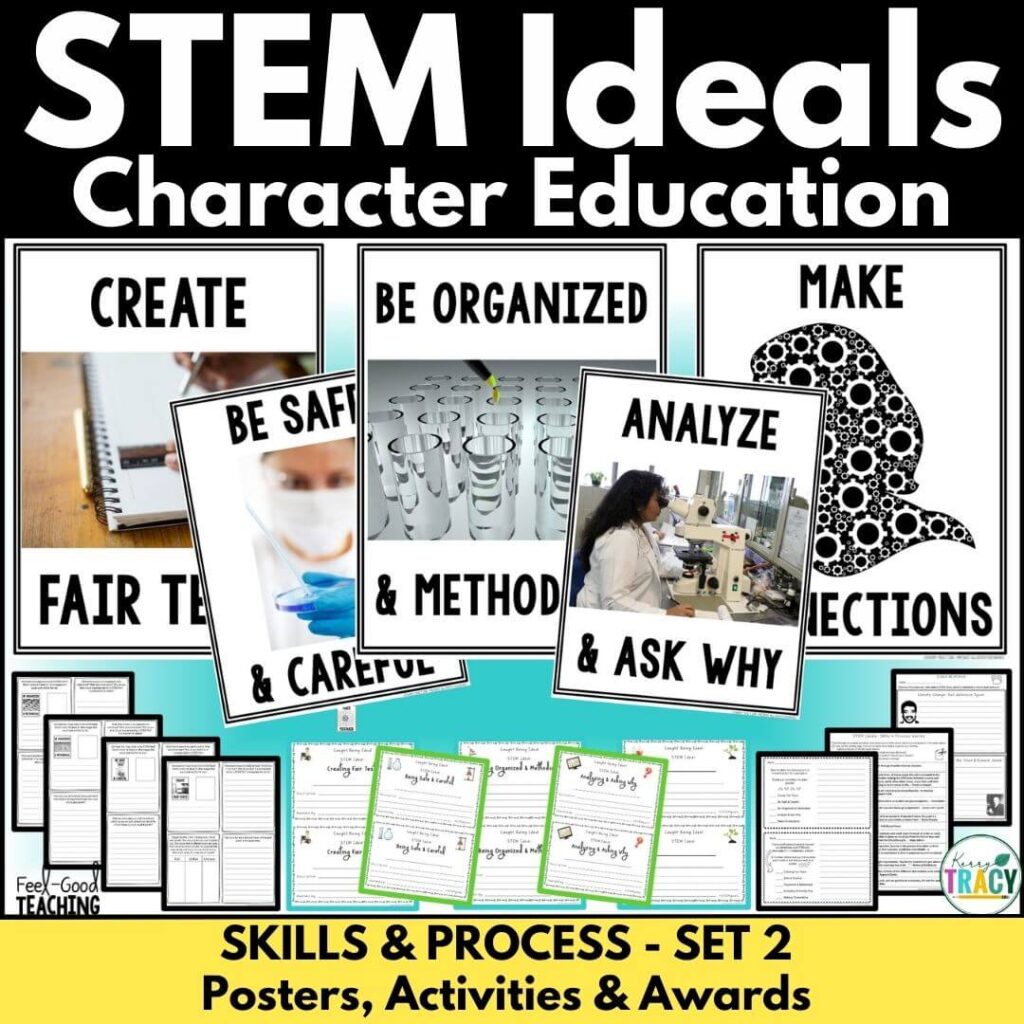
    STEM Posters Character Ed Set 2, Skills & Process. Posters shown along with student handouts and awards.
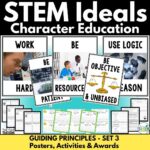
    STEM Posters Character Ed Set 3, Guiding Principles. Posters shown along with student handouts and awards.


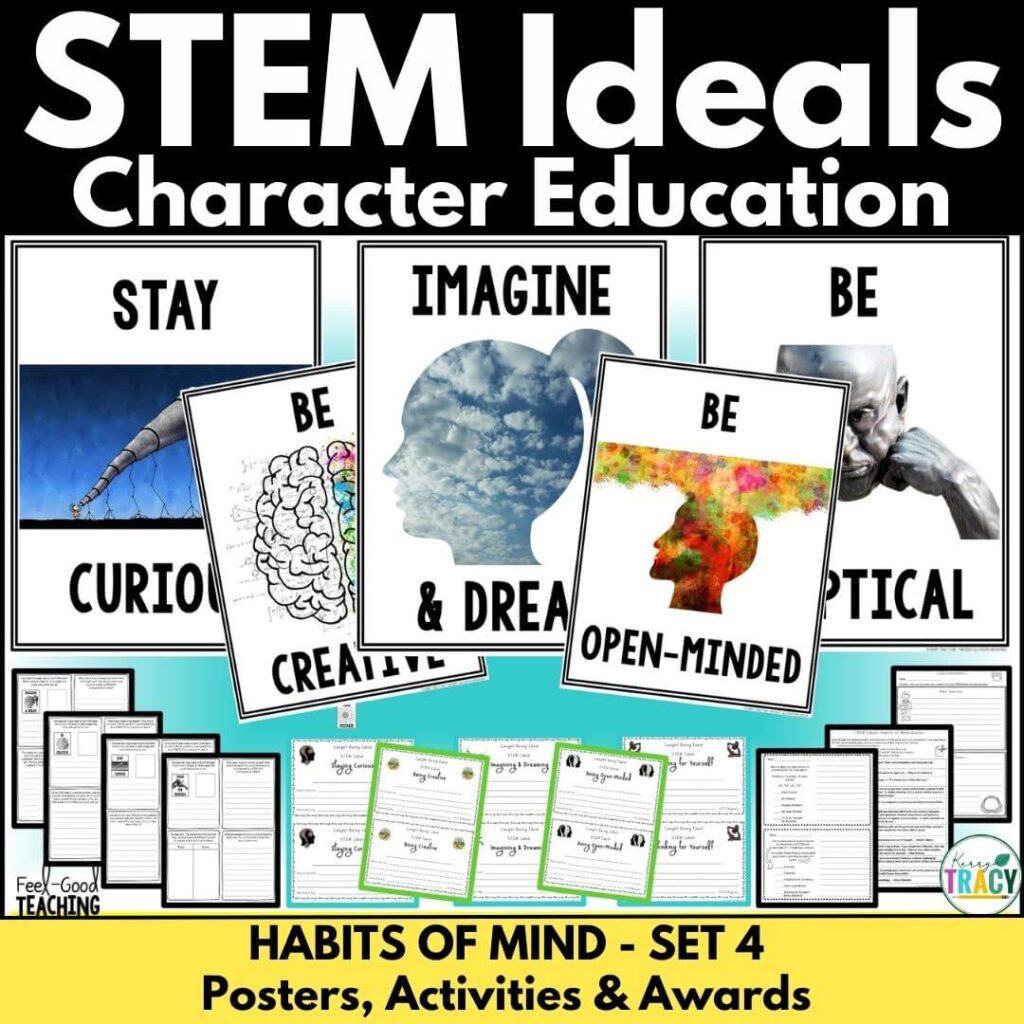
    STEM Posters Character Ed Set 4, Habits of Mind. Posters shown along with student handouts and awards.


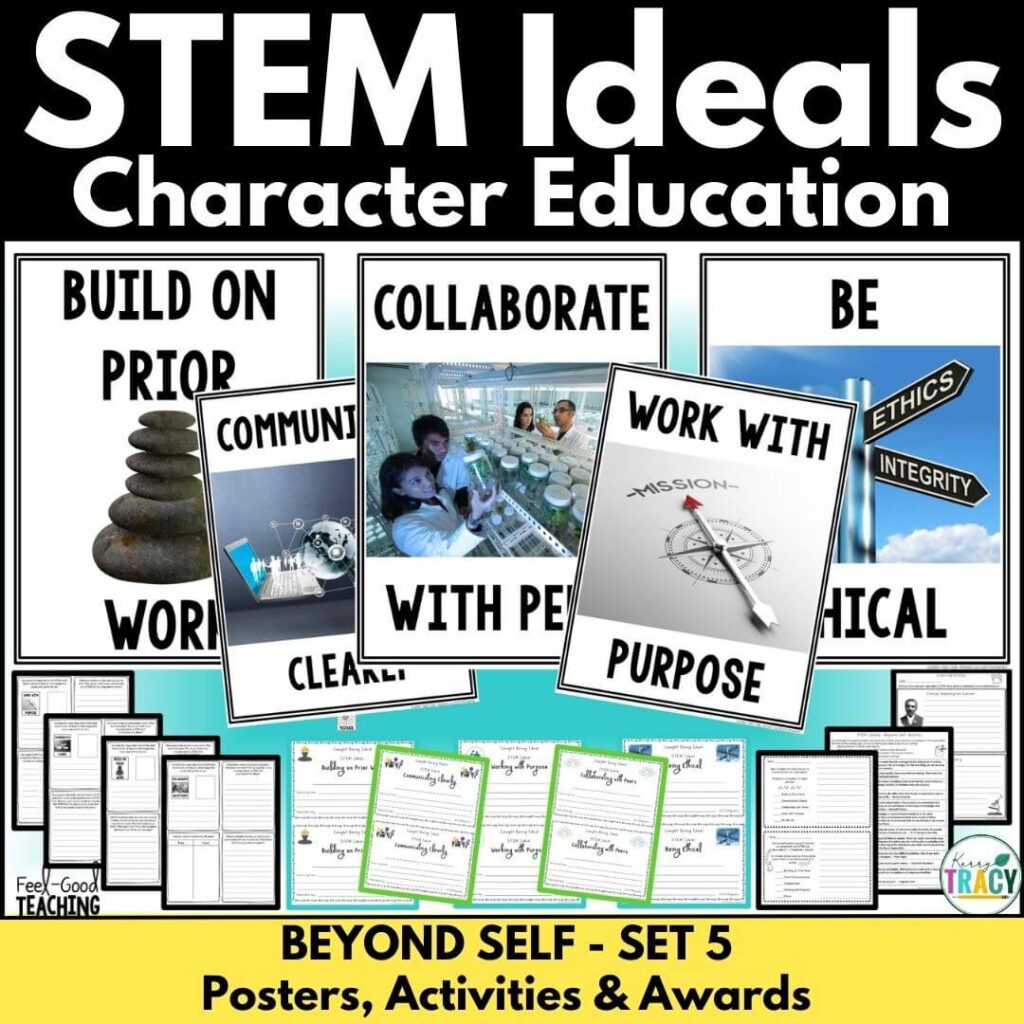
    STEM Posters Character Ed Set 5, Beyond Self. Posters shown along with student handouts and awards.


    PIN ME, DON’T FORGET ME!

    “Science is a way of thinking much more than it is a body of knowledge.” – Carl Sagan. This STEM ideals series aims to identify the special way scientists, and all STEM Pros, think and behave so we may better practice the traits ourselves – in (and hopefully beyond) STEM classes! In keeping with a growth mindset approach, we actively strive toward the STEM ideals, even though we may fall short on occasion. Click through to the blog for details!